

Successful fleet management is about efficiency, control, and visibility into the costs that affect daily fleet operations. For many businesses, fuel purchases are one of the most frequent and important data points to monitor. Real-time fleet card data can give fleet managers transaction-level insight into fuel spend, driver activity, vehicle usage, and fuel consumption trends, which can make it easier to find savings and improve fuel efficiency across the fleet. The Federal Energy Management Program at the U.S. Department of Energy notes that collecting and managing high-quality data are critical elements of effective fleet management.¹
When drivers are aware their transactions are monitored in real time, they are more likely to have responsible spending behaviors and less likely to misuse their cards.
Fleet fuel cards are generally equipped with real-time data capabilities that support fleet management with fuel card data. With up-to-date information, fleet managers can monitor fuel purchases, help control fuel costs, improve route planning, and make decisions that can strengthen fleet operations. When used appropriately, fleet card data can lead to improvements in many areas including:
- Fuel spend and cost control
- Fuel management and fuel efficiency
- Fuel purchase monitoring
- Compliance and driver accountability
- Administrative automation
- Security, fraud prevention, and PIN protection
- Reporting, dashboards, and analytics
- Route planning and fleet operations optimization
Before we explore each benefit, let’s examine what real-time fuel card data captures and how those data points can help managers make more informed decisions about fuel purchases, vehicles, drivers, and costs.
What Real-Time Fuel Card Data Captures
Many fleet managers use fleet cards as payment methods for expenses related to fueling and maintaining fleet vehicles. These cards function similarly to credit cards but include controls and reporting features that a standard credit card typically does not provide. For starters, most fleet fuel cards include fuel rebates. Some, like Valero Fleet Cards, may include discounts on hotels, tires and auto parts. Most importantly for fleet management, these business gas cards generally capture transaction data as fuel purchases happen, which can give managers current visibility into fuel costs, driver activity, and vehicle usage.
When a driver makes a purchase with a fleet card, the transaction details are recorded and sent to a fleet card dashboard. For fleet management, this fuel card data is especially useful because it connects each fuel purchase to a driver, vehicle, location, fuel station, fuel type, mileage entry, and time of purchase. That transaction data can give managers a clearer view of fuel costs at the pump and help separate normal fuel usage from exceptions that require attention. The information can include:
- Date and time
- Location
- Fuel type (gas vs. diesel)
- Fuel grade (regular vs. premium)
- Mileage
- Driver ID
- Gallons purchased and price per gallon
- Fuel station or approved purchase location
- Vehicle ID, when available
- Purchase amount and transaction status
With access to this data, a fleet manager or business owner can improve many aspects of managing a fleet of vehicles, from fuel expense tracking and driver accountability to fleet fuel management and operational performance.
Enhancing Fleet Management with Real-time Data
Let’s look at the main ways real-time fuel card data can benefit fleet management, with a focus on fuel costs, savings, efficiency, reporting, integrations, and fraud prevention.
Using Fuel Purchase Data to Control Fleet Costs
Real-time fleet card data can be especially helpful for controlling fuel costs. Because each fuel purchase is generally recorded as it happens, fleet managers can monitor fuel spend against budgets instead of waiting for monthly statements. That can make it easier to spot rising fuel costs, compare spending by driver or vehicle, and identify savings opportunities before small issues become expensive patterns. Fuel prices also move from week to week: the U.S. Energy Information Administration put the national average at $4.006 per gallon for regular gasoline and $5.257 per gallon for on-highway diesel in the week ending 10 August 2026.²
With fleet cards, fleet managers can also set spending limits and restrictions on fuel types, purchase amounts, transaction times, and approved purchase locations. Combining purchase controls with real-time information can be a practical way to put clear boundaries on spending and help keep fuel card use aligned with company policy.
Improving Fuel Efficiency with Fuel Consumption Trends
Fleet fuel management and cost control are directly connected. Since fuel is often one of the largest line items in a fleet-dependent business’s budget, it can help to manage fuel as its own performance category, with fuel efficiency, fuel economy, and fuel consumption trends reviewed regularly. In for-hire trucking, the American Transportation Research Institute put the industry-average marginal cost of operating a truck at $2.336 per mile in 2025, or $1.854 per mile excluding fuel.³
Real-time fleet card data can provide visibility into fuel consumption patterns across drivers, vehicles, routes, and locations. Trends can be viewed as driver-specific, vehicle-specific, or fleet-wide, which can give managers practical fuel data for improving fuel efficiency and reducing unnecessary fuel costs. Vehicle upkeep affects those numbers as well: the U.S. Department of Energy and the EPA report that keeping tires inflated to the proper pressure can improve gas mileage by 0.6% on average, and up to 3% in some cases, and that using the manufacturer’s recommended grade of motor oil can improve it by 1% to 2%.⁴
A manager can flag vehicles with abnormal fuel consumption rates, which may indicate a maintenance issue, inefficient driving habits, excessive idling, or a driver behavior problem. Real-time data also can help fleet managers improve route planning, coach drivers, and reduce unnecessary fuel spend. According to the U.S. Department of Energy and the EPA, aggressive driving can lower gas mileage by roughly 15% to 30% at highway speeds and 10% to 40% in stop-and-go traffic, and idling can use a quarter to a half gallon of fuel per hour.⁵
Connecting Fuel Card Data with Fleet Management Systems
Fuel card data becomes more useful when it connects with the other systems a business already uses to manage vehicles, drivers, expenses, and reporting. Many fleet managers use a fuel card dashboard alongside accounting software, bookkeeping tools, GPS tracking, telematics, or fleet management software to create a more complete view of fleet operations.
This kind of fuel card integration can help managers compare transaction data with routes, vehicle usage, mileage, driver behavior, and maintenance needs. When fuel purchases and fleet activity are reviewed together, it can be easier to identify exceptions, reduce manual reconciliation, and make faster decisions about fuel efficiency, utilization, and operational performance. The Department of Energy notes that telematics platforms can generate maintenance reminders based on mileage or engine hours and monitor engine fault codes for proactive maintenance.⁶
Improved Compliance, Safety and Accountability
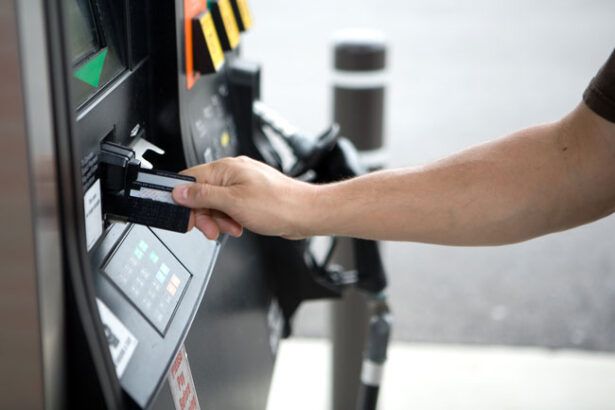
Compliance with company policies and accountability among employees can be important for managing fleets efficiently. Monitoring transactions in real time can help fleet managers enforce adherence to spending policies because each transaction is typically linked to a specific employee, vehicle, location, and fuel purchase. Detailed transaction records can also support compliance reviews and driver accountability. Managers can compare fuel card activity with assigned routes, vehicle usage, and company policy, then address driver behavior issues before they affect safety, budgets, or customer service. Fuel records can also support compliance obligations beyond company policy: under the International Fuel Tax Agreement, member jurisdictions act cooperatively to administer and collect motor fuel use taxes, and a licensee’s base jurisdiction provides and processes a tax return each quarter.⁷ When drivers are aware their transactions are monitored in real time, they may be more likely to have responsible spending behaviors and less likely to misuse their cards.
Automating Fuel Expense Tracking and Reconciliation
With detailed fuel purchase data captured and logged, managers can reduce manual receipt collection, expense report follow-up, and repetitive data entry.
Fleet management involves many administrative tasks, including tracking fuel expenses, reconciling receipts, processing expense reports, and reviewing fuel purchases. Real-time fleet card data can automate much of the fuel expense tracking process. Instead of collecting receipts, manually entering transactions, and waiting for a monthly statement, managers can review current transaction data from the dashboard and reconcile fuel expenses more quickly. The IRS states that a business may choose any recordkeeping system that clearly shows its income and expenses, and that records must be kept as long as needed to prove the income or deductions on a tax return.⁸
With credit cards, you typically must wait for a monthly statement for reconciliation, and using cash can lead to entry errors. Fleet cards can give you current information that can improve cash flow visibility and give the business a cleaner record of fuel costs.
To make administrative tasks even easier, many fleet card dashboards can communicate with bookkeeping and accounting software, helping businesses reduce manual reconciliation and help keep fuel expense tracking consistent.
Reducing Fraud, Misuse and Unauthorized Purchases
Real-time fuel card data can act as an additional security measure and help reduce the risk of fraud. By monitoring transactions in real time, fleet managers can more quickly detect suspicious activities or irregularities, such as unauthorized purchases, off-route locations, unusual purchase amounts at the pump, or excessive spending. Managers can use alerts, purchase controls, driver IDs, and PIN protection to help reduce the risk of fuel card misuse and flag anomalies before they become larger problems. Catching problems early matters: in its Occupational Fraud 2026 study, the Association of Certified Fraud Examiners reported that the median fraud scheme ran 12 months before detection, and that schemes caught within the first six months carried a median loss of $40,000, compared with more than $1.1 million for schemes lasting more than five years.⁹
Reporting, Dashboards and Fleet Analytics
Many fleet fuel cards are equipped with powerful reporting tools. Fleet managers can run these reports from the fleet card dashboard and use analytics to identify trends in fuel spend, vehicle usage, driver behavior, and fuel consumption. Depending on the card program, standard reports can include:
- Fuel usage reports: view how much fuel is being used by a driver, vehicle, location, or date range.
- Vehicle usage reports: connect mileage, routes, vehicle utilization, and fuel consumption patterns.
- Monthly transaction summaries: view the total amount of fuel purchased, fuel costs, average price per gallon, federal taxes, state taxes, rebates, and discounts.
- Fuel spend reports: compare fuel costs by driver, vehicle, route, or location.
- Fuel purchase exception reports: identify unusual amounts, locations, purchase times, or card activity.
- Fuel savings reports: highlight rebates, discounts, and cost-saving trends.
In addition to these basic reports, fleet managers can create customized reports based on the date range and data points they want to view. These dashboards and analytics can help managers move from simple reporting to ongoing optimization. By reviewing trends in fuel spend, vehicle usage, driver behavior, and fuel consumption patterns, managers can identify performance issues, improve utilization, find savings opportunities, and make decisions that may support long-term ROI.
When you consider these reports can be run with current data, fleet cards become even more valuable to fleet management because they can help managers act on fuel costs and operational issues while there is still time to make a change.
Using Real-Time Data to Optimize Fleet Operations
Each of the previously mentioned benefits can combine to improve fleet operations. With current fuel card data, managers can act on issues as they happen, adjust route planning, monitor vehicle utilization, and help make sure resources are used effectively. Better visibility into fuel purchases, fuel consumption, driver behavior, and fleet performance can help managers improve productivity, reduce waste, and make daily decisions with less guesswork. Idling alone accounts for a meaningful share of that waste: the U.S. Department of Energy estimates that more than 6 billion gallons of gasoline and diesel combined are lost to idling every year, and notes that decreasing idle time can also reduce engine wear and associated maintenance costs.¹⁰
With each positive shift in operational efficiency, a fleet can improve cash flow, strengthen logistics, and create a more reliable operating rhythm.
Run a Better Fleet with Real-Time Fuel Card Data
Fleet management with fuel card data can give businesses a clearer view of the fuel purchases, driver activity, vehicle usage, and spending patterns that shape daily fleet operations. With real-time reporting, purchase controls, fraud prevention tools, and fuel analytics, fleet managers can help control fuel spend, look for savings, improve fuel efficiency, and make faster decisions.
For fleet managers and business owners looking for tools to improve fleet management, there is a good place for many businesses to start-and that’s with a fleet card.
¹ U.S. Department of Energy, Federal Energy Management Program, “FEMP Best Practices: Fleet Management Framework,” https://www.energy.gov/cmei/femp/femp-best-practices-fleet-management-framework (accessed 17 August 2026).
² U.S. Energy Information Administration, “Gasoline and Diesel Fuel Update,” https://www.eia.gov/petroleum/gasdiesel/ (week ending 10 August 2026; updated weekly).
³ American Transportation Research Institute, “An Analysis of the Operational Costs of Trucking: 2026 Update,” released 15 July 2026, https://truckingresearch.org/about-atri/atri-research/operational-costs-of-trucking/. Figures are for for-hire trucking.
⁴ U.S. Department of Energy and U.S. Environmental Protection Agency, “Keeping Your Vehicle in Shape,” FuelEconomy.gov, https://www.fueleconomy.gov/feg/maintain.jsp (accessed 17 August 2026).
⁵ U.S. Department of Energy and U.S. Environmental Protection Agency, “Driving More Efficiently,” FuelEconomy.gov, https://www.fueleconomy.gov/feg/driveHabits.jsp (accessed 17 August 2026).
⁶ U.S. Department of Energy, Federal Energy Management Program, “Telematics for Federal Fleets: A Guide for Efficient Fleet Management,” https://www.energy.gov/femp/telematics-federal-fleets-guide-efficient-fleet-management (accessed 17 August 2026).
⁷ IFTA, Inc., “Carriers,” International Fuel Tax Agreement, https://www.iftach.org/Carriers/ (accessed 17 August 2026).
⁸ Internal Revenue Service, “Recordkeeping,” https://www.irs.gov/businesses/small-businesses-self-employed/recordkeeping (accessed 17 August 2026).
⁹ Association of Certified Fraud Examiners, “Occupational Fraud 2026: A Report to the Nations” (key findings), released 12 May 2026, https://www.acfe.com/acfe-insights-blog/blog-detail?s=key-findings-report-to-the-nations-2026 (accessed 17 August 2026). Figures describe occupational fraud generally, not fleet card misuse specifically.
¹⁰ U.S. Department of Energy, Alternative Fuels Data Center, “Idle Reduction Benefits and Considerations,” https://afdc.energy.gov/conserve/idle_reduction_benefits.html (accessed 17 August 2026).